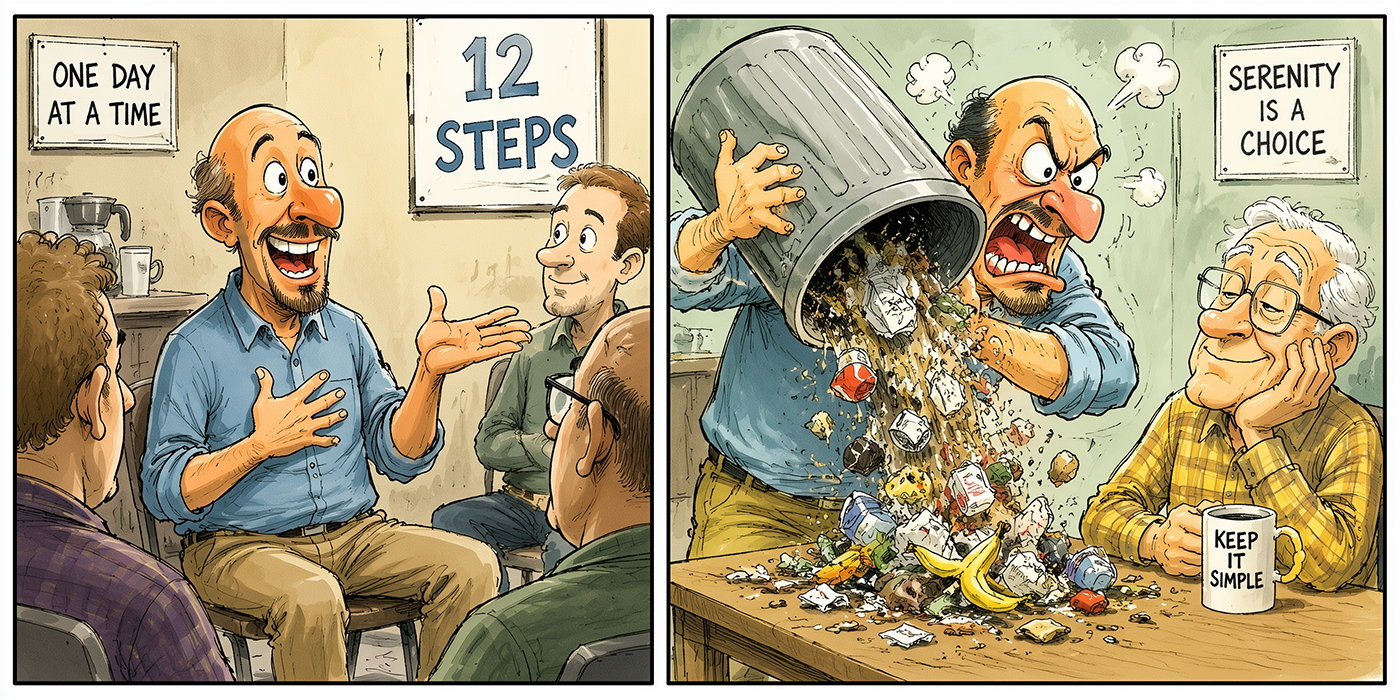

Wisdom has taught her that enthusiasm in early recovery did not always translate into appropriate sharing.
After being sober for a few months, I decided to join a faith community. They held a community day every month, which I decided to participate in.
During my first community day, I got into a conversation with a couple, and we hit it off right away. They invited me over for dinner, and during that dinner, we got to know each other better.
Without hesitation, I laid my whole life story on the table: that I am a sex addict, that I have been in the depths of hell, what I have done, and that I am now recovering from my sex addiction. These people were very understanding and attentive, and they asked a lot of questions. And I answered every question with great pleasure.
Unfortunately, our friendship did not last, and I was very ashamed that I had told them so much. I was also afraid that they would tell the rest of the community.
The question I asked myself was: Why did I tell them that I am a recovering addict? And why in such detail? I thought about it a lot, and I think that the main answer is that my addiction defined my identity. This was who I had been for years: a sex addict. This was what I spent all my time on and where I derived my identity from. That didn’t change in my first year of sobriety. I was still a sex addict, but sober, and so that was my new identity: I went to meetings, did the Steps, and made phone calls. It was still all I was. Nathalie, the sexaholic.
I thank God that they never told anyone and never used it against me. Luckily for me, recovery really works, and now I have more than just sobriety: I know who I am, and that is much more than being a sex addict. Today, it would be the last thing I would tell people. There is a time and place for everything, and the only true place for this is our SA Fellowship, for which I will never be sufficiently grateful.
Nathalie V., Belgium