
Bringing the inside out has taught her how to connect with members in the Fellowship.
My name is Margot. I am a sexaholic. My sobriety date, through God’s grace and the grace of the Program, is March 14, 1986. My history is that I acted out, first with myself and then with others, for about 30 years before I found this Program.
The language of lust is wonderfully described in our White Book in the section called “The Problem.” The language of lust lied to me over and over. It told me that acting out was connecting me with people, when in fact acting out was driving me more and more into disconnection from myself, others, and God. As the White Book says, “Conning ourselves time and again that the next one would save us, we were really losing our lives” (SA 203).
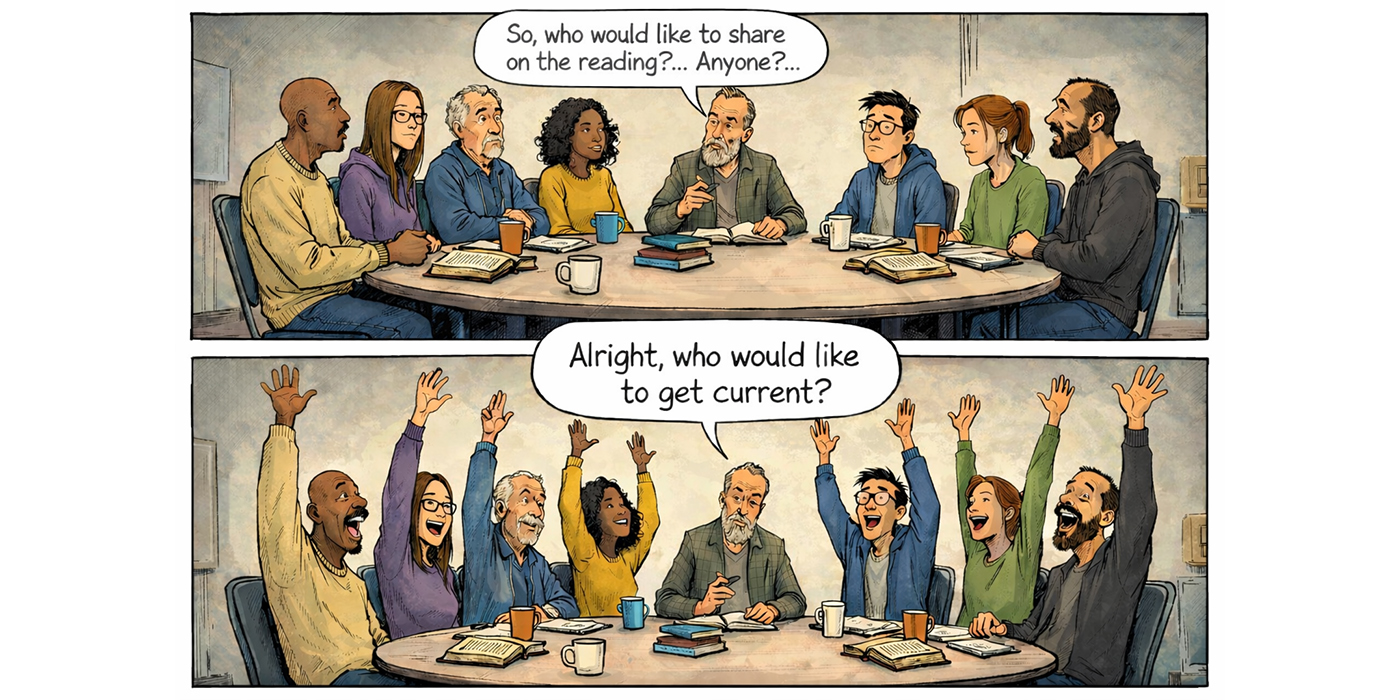
By contrast, the language of recovery tells the truth. Through the Steps, Traditions, slogans, literature, meetings, and the Fellowship, it tells me the truth of my addiction, why my life wasn’t working, the truth of my dependence on a loving Higher Power, and the truth of my place on earth among other human beings. The language of recovery has taught me that the key to connecting to other people is through sharing—“bringing the inside out,” as the White Book says. In sharing my experience, my history, my vulnerabilities, my powerlessness, my weakness, and my unmanageability, I’ve learned that I’m not alone.
I’ve learned that other people have the same feelings and thoughts I do, even though their circumstances might be different. It’s that identification with others that the AA Big Book and White Book talk about that is so powerful, both for my own recovery and for carrying the message to others. Before the Program, I didn’t know that men had the same kinds of feelings I did.
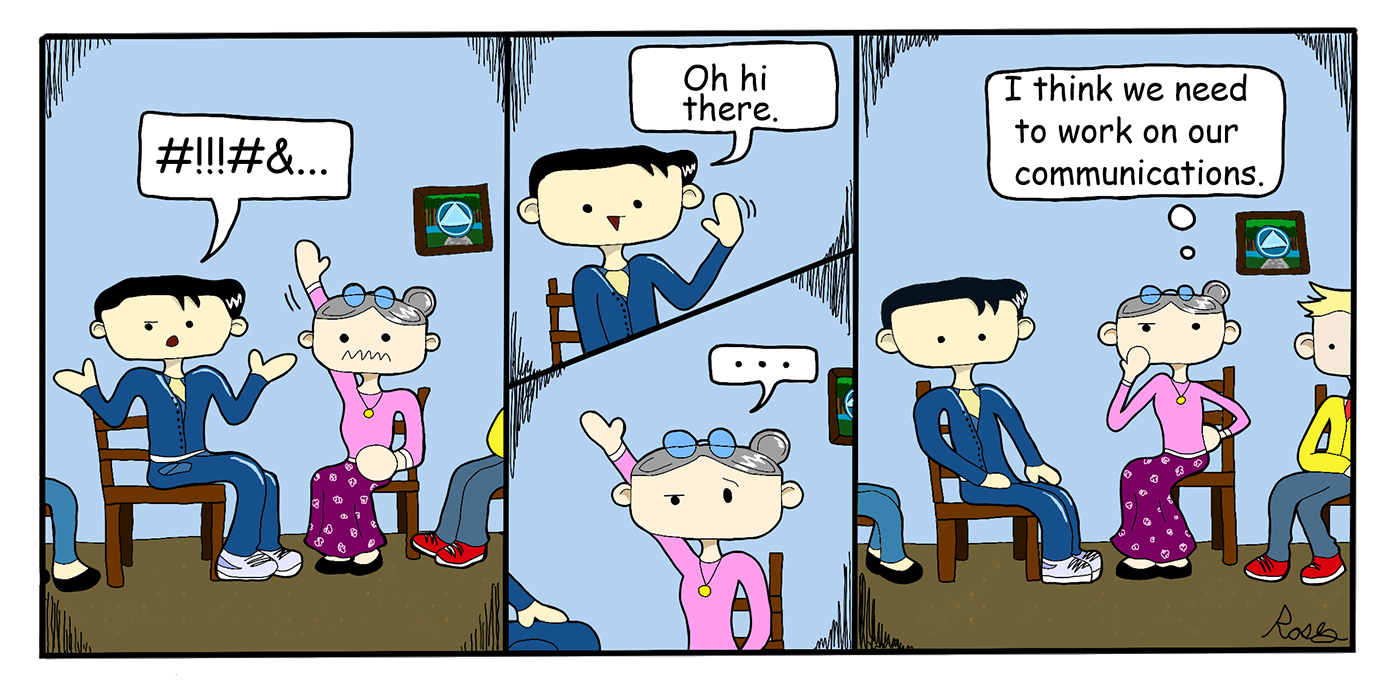
I grew up when families didn’t talk about feelings. Listening to other people’s open-hearted sharing within the boundaries of the language of recovery has brought me closer to both women and men, and closer to myself. I believe what our literature says: that the language of recovery must be spoken aloud, in fellowship with others. I need to speak it, and I need to hear you speak it. As an addict, I have a “built-in forgetter,” so I must hear the language of recovery over and over from other people: through prayer and meditation, from the literature, and from my Higher Power when I say something to my sponsees that I need to hear myself. Sharing the language of recovery with others in the day-to-day working of the Program has created a feeling of community that, one day at a time, fills the spot in me I once thought was empty. Today, instead of acting out, I turn to my Higher Power and others in the Program. This is the real connection.
Here is some Program language that helps me connect with others:
- Take the actions of love and the feelings will follow
- “Seek, listen, and follow” Higher Power’s guidance
- Sobriety and recovery first in my life
- Asking for help from Higher Power, my sponsor, and others
- Asking to carry the vision of God’s will into all my activities
- Bookending and praying before and after phone calls, emails, and events
- Restraint of tongue and pen
- Praying for others, especially those I fear, resent, or lust after
- Making amends promptly
- Daily prayer, meditation, and regular inventory
- Gratitude lists
- Breathing
- Listening
Here are some prayers that help me connect with others:
- The Serenity Prayer
- “Please free me from my lust. I can’t handle it. I give it to You, God.”
- “Bless them, change me.”
- “Please let me find in You what I’m looking for in this person, place, or situation.”
- “Please show me what kind of relationship You want me to have with this person.”
- “Please let me play the role You assign in this situation.”
- “Please remove my fear (or lust, selfishness, controllingness, or any agenda I might have) and direct my attention to what You would have me be.”
My new way of living spills over into my life outside of Program—at church, at work, and with friends and family. My relationship with my sister has been transformed. I’m close friends with a former roommate who was caught in the middle of my acting out years ago. I still have a lot to learn, but this Program gives me a chance to relate to women and men, in and out of the Program, with respect, understanding, acceptance, appropriate boundaries, and even love.
Margot, USA