
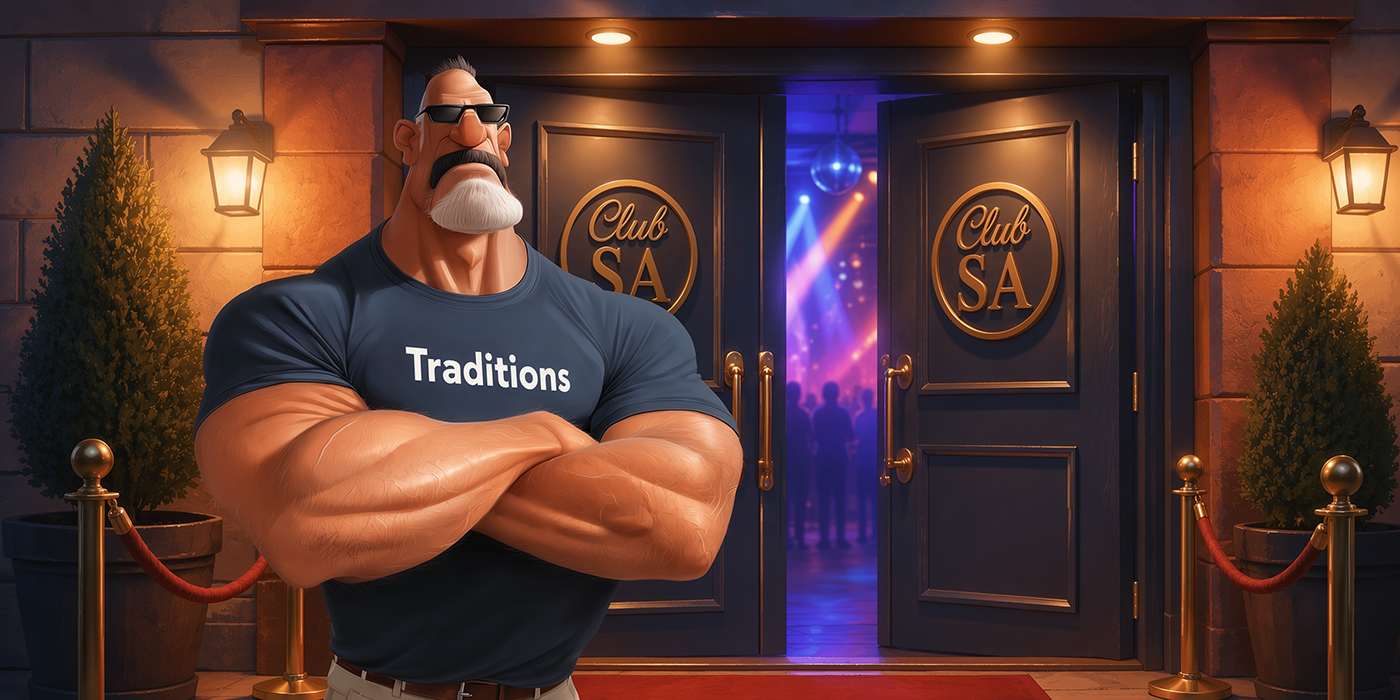
The Traditions allow the Fellowship to exist in order to carry the message of recovery.
The Twelve Traditions are the foundation of SA life, and deserve full attention. Without them, factions, personalities, outside interests, and money would easily destroy us. It is the Traditions, formed with much trial and error by AA, and adapted for SA, which keep us safe from these pressures and free us to concentrate on our lives of recovery and service.
That is what Tradition One is about. If we were to let personalities have influence, we would die out rapidly as just another interest group in society. This is important for Tradition Two, which is the foundation stone of group conscience meetings and the service structure. Imagine if we had a CEO giving and enforcing orders! This tradition makes that impossible, in perpetuity.
Tradition Three is perhaps the most often quoted. When I first contacted SA, the website had the twenty questions–all related to whether you think you are a sexaholic. I said yes to 18, so I joined SA, and my life was saved.
Imagine if my answers had been marked by an officer to see if I qualified. Or if SA had had psychometric testing to rule out “fallen women.”
AA history shows the importance of Tradition Three. They used to have membership rules, then collated them, seeing that if they all applied, there would be no one good enough to join!
So AA decided that a person is a member when they say so. This has always held true in SA and is largely taken for granted. Yet, it was not always so in AA, to whom we owe a large debt for their pioneering experiences.
The remainder of the Traditions are similar. No control by financial concerns, no outside organizations, no egos—nothing except members shoulder to shoulder in the lust recovery business, for no reward other than 24 hours of sobriety. Carried out day to day in group after group, each autonomous, unless its choices were to affect other groups or SA as a whole.
Thus, the group conscience of each group taken together is the authority in SA, and the entire service structure (called the inverted pyramid) is at the service of the group conscience. Without the Traditions, this pyramid would invert, and we would be under orders from the top.
So long as we keep these hard-won Traditions, we are safe and secure, “here and hereafter.” Our entire Fellowship depends on that.
Kathie S., Devon, UK